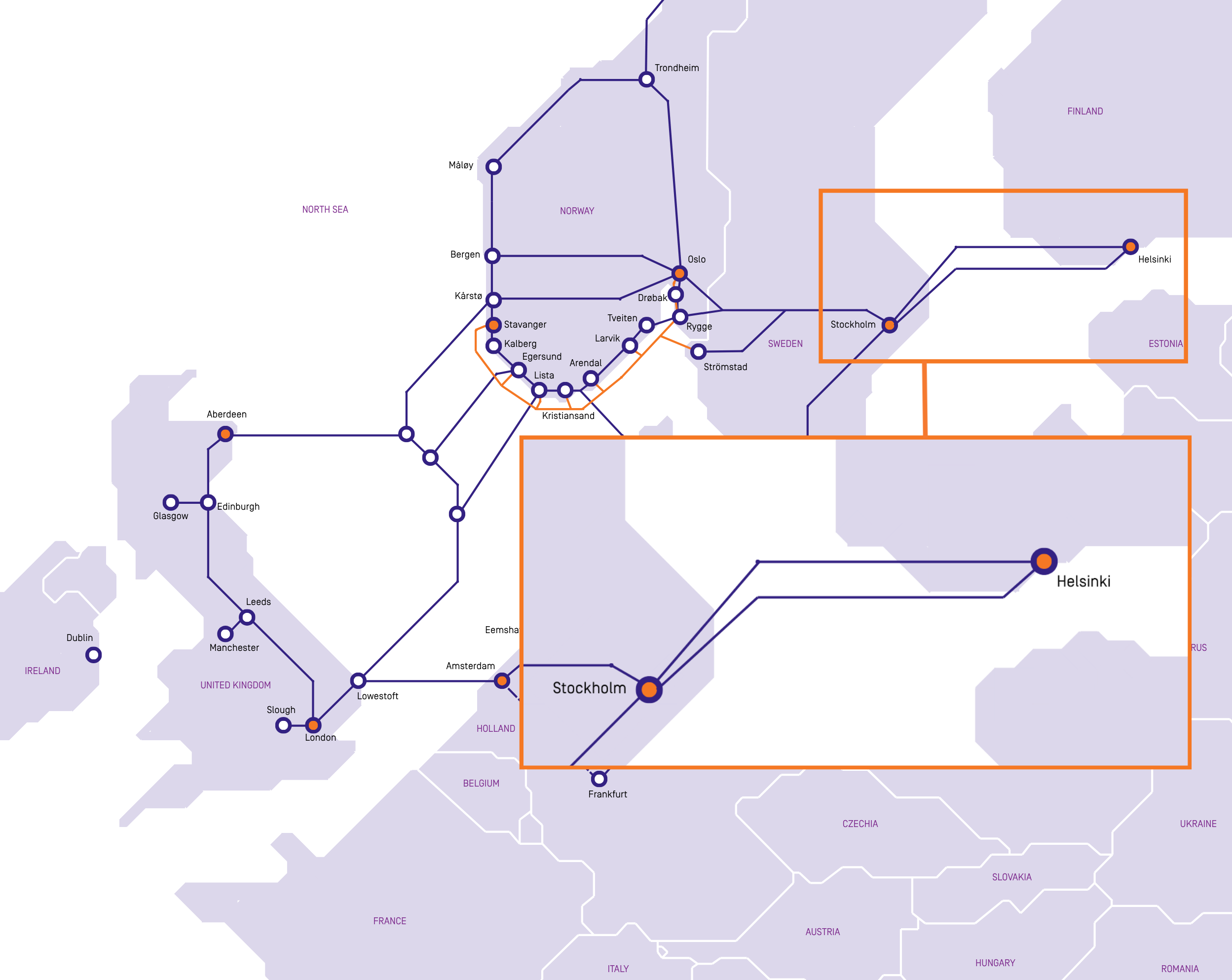
Tampnet has completed the new DWDM network between Stockholm and Helsinki: two geographically separate routes across the Baltic Sea. Much of the installation was carried our by one of our own engineers, Øyvind Midtun, who set off from his home in Sokndal in Southern Norway and spent 12 days on the road across Sweden, Åland and Finland.
The network runs on two physically separate paths: a northern route via Åland and a southern route through the outer archipelago, with a ring connecting key points in Helsinki. If one route is disturbed, the other has the full capacity to carry all the traffic on its own.
With a total of 800-900 kg of equipment to install, most of it was shipped straight to their site. Øyvind took the route by car, driving 3,795 km to visit all fifteen sites and with a plan that allowed three hours per site. At each site, he worked from a signal flow diagram showing exactly how amplifiers, wavelength selective switches and mux cards were connected. In the larger sites, that means dozens of fibre patches, each one to the right port.
Every connector was cleaned and inspected under a microscope. The core of a singlemode fibre is only around 9 micrometers across, far thinner than a human hair, and a single speck of dust can cause the losses that eat into capacity.
After that came OTDR measurements: short pulses of light sent into the fibre to show, metre by metre, where the signal weakens and where something needs fixing. When the instrument says "fail", the job is simple to describe, but slower to do: find the fault, clean or re-splice, and measure again.
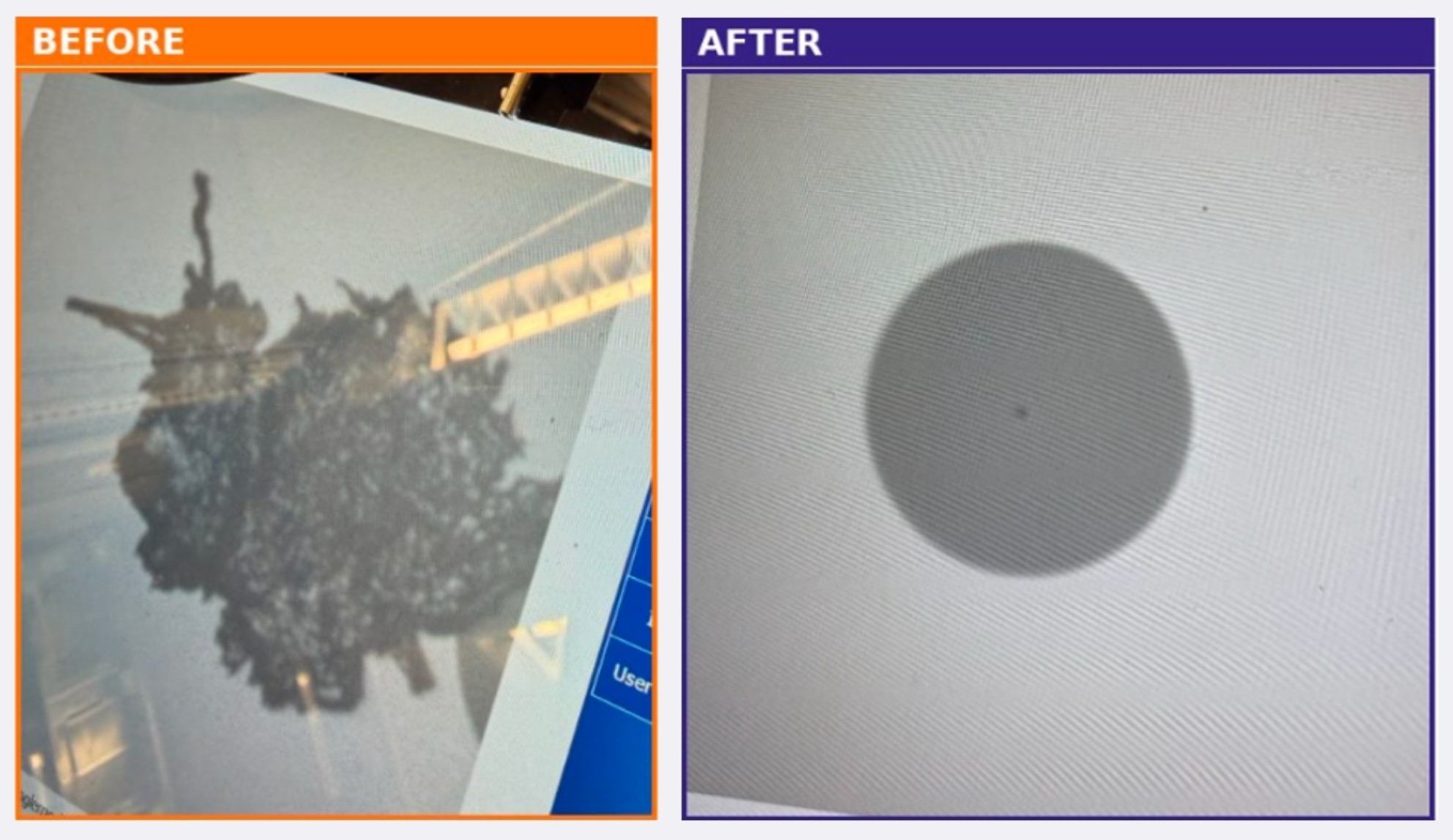 Fibre connector under the microscope, before and after cleaning. Inspected with EXFO ConnectorMax2, IEC 61300-3-35. The fibre is approximately 9 micrometers, the dot in the centre to the right.
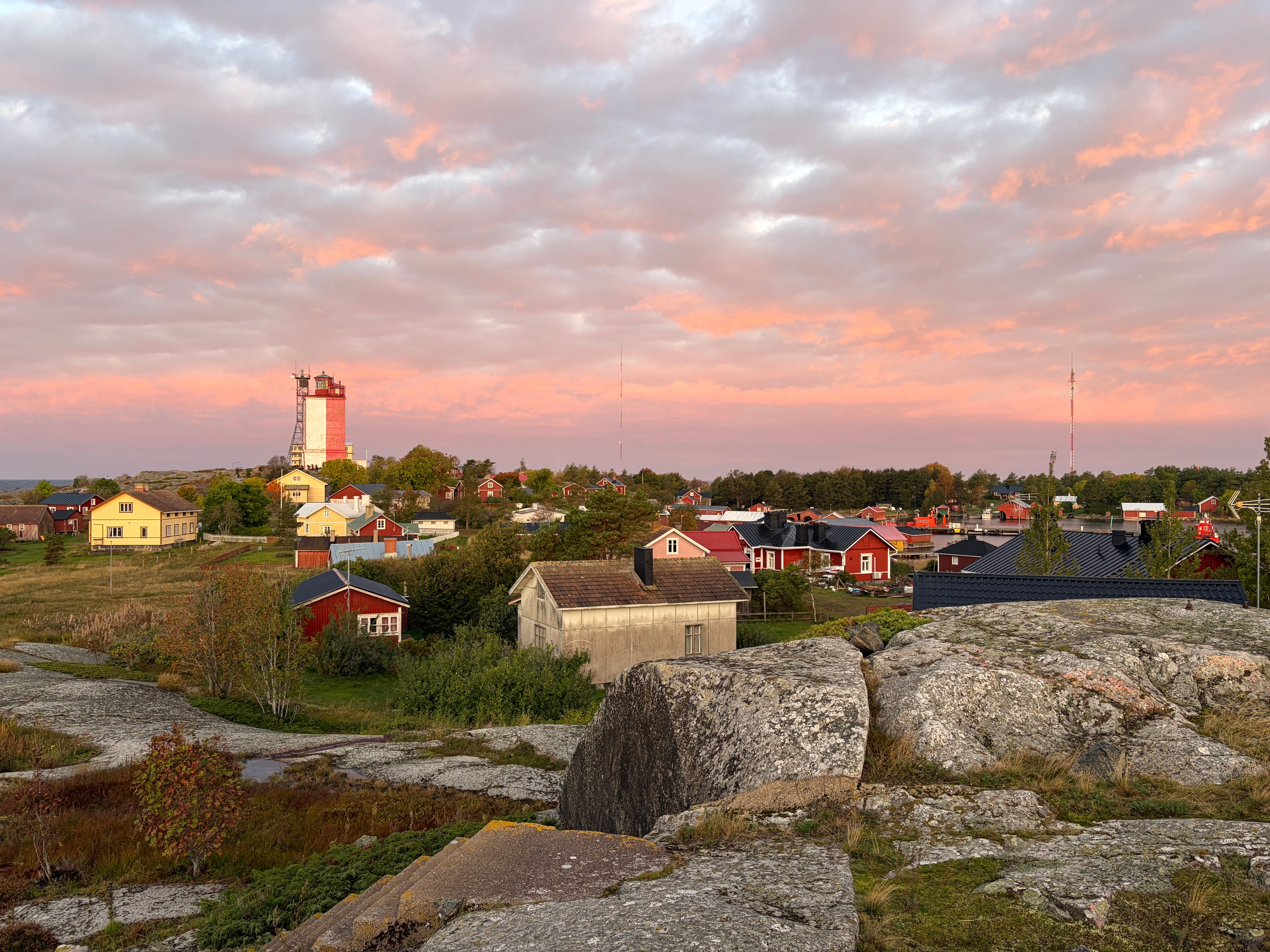
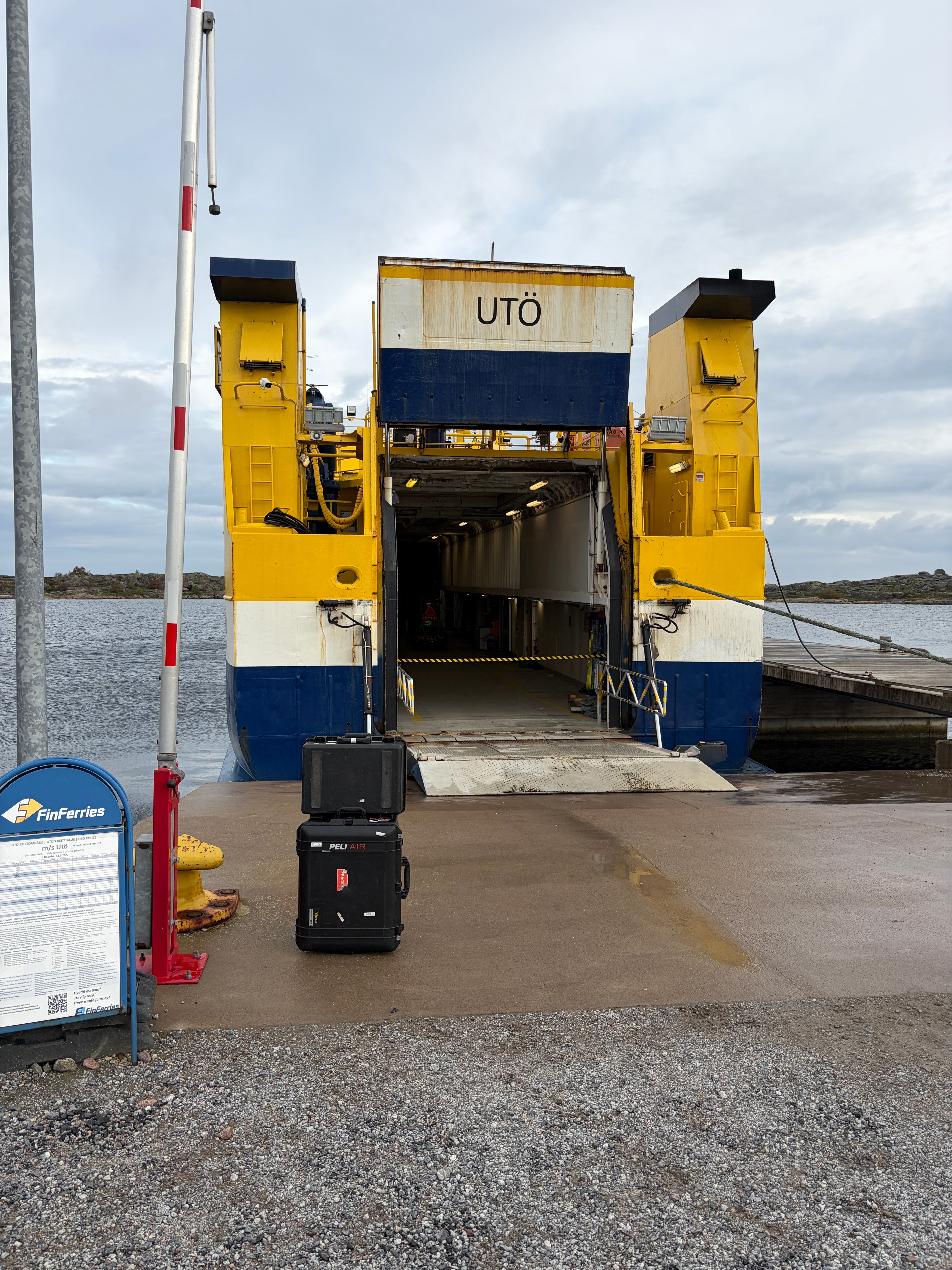
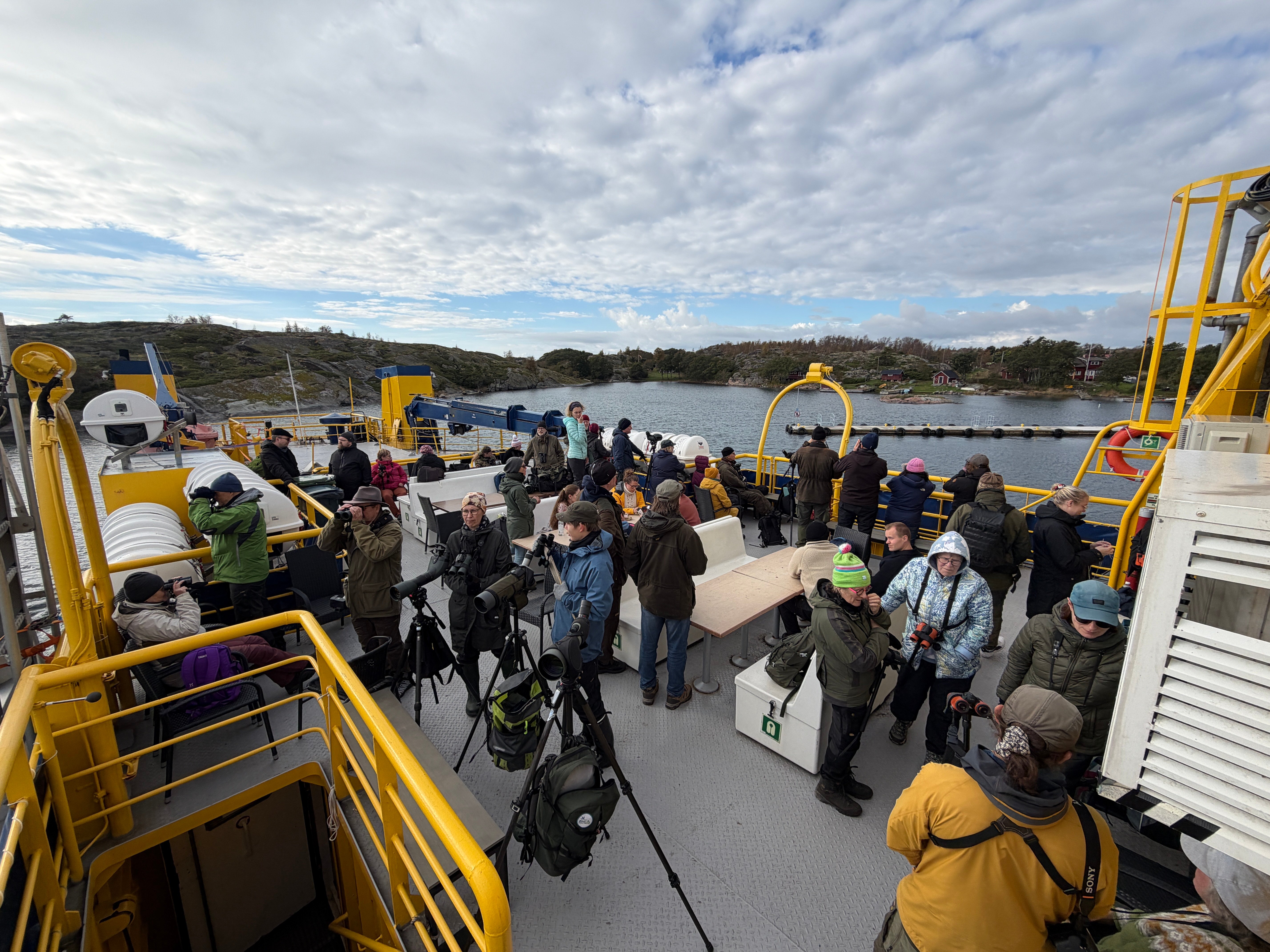
The last and most remote site was a small island at the outer edge of the Finnish archipelago, four and a half hours away by ferry. The ferry was full, but not of technicians. It was autumn migration season, and the deck was packed with binoculars, spotting scopes and long camera lenses.
They came to watch birds cross the Baltic Sea, while Øyvind came to make sure data can do the same.
Now all 15 sites have new equipment, both routes are in service, and every span shows green in our network monitoring. When asked what he is most proud of, Øyvind points to the team: "That we as a team managed to pull this off. With tight deadlines from the moment the project was approved, through the planning, and solving every challenge that came up along the way together, quickly and as we went."
And one small confession: "I´m also very glad I drew up the schedule myself. Otherwise, I´d probably have been frustrated with whoever came up with such a hectic plan."